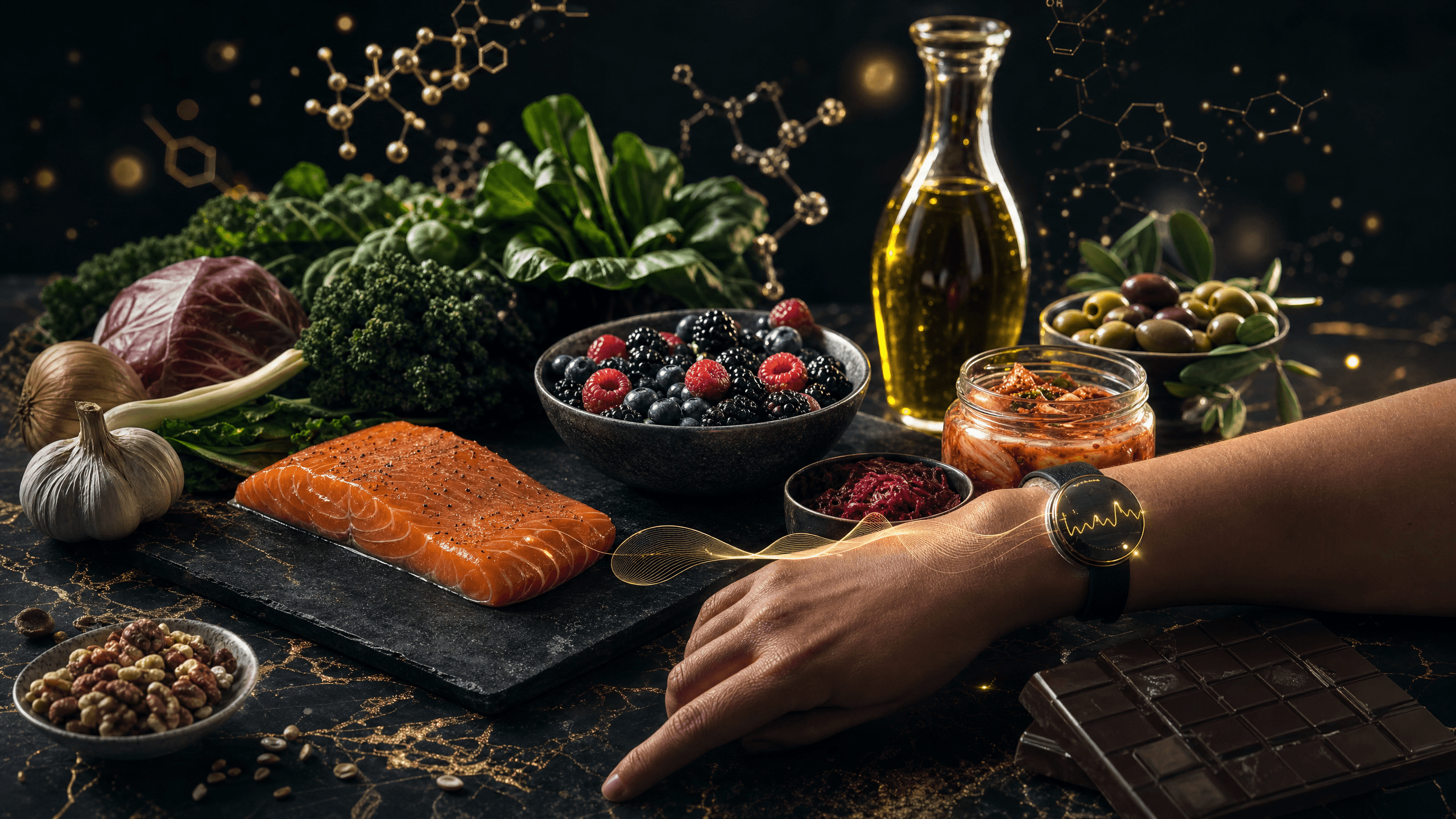
Food as Biological Information
The calorie model of nutrition — the idea that food is simply fuel to be burned — is one of the most reductive and ultimately harmful frameworks in modern health. Food is not fuel. Food is information. Every macronutrient, micronutrient, phytochemical, and fibre you consume sends specific signals to your cells, influencing which genes are expressed, which enzymes are activated, which hormones are produced, and which inflammatory pathways are turned on or off.
This is not metaphor. It is the science of nutrigenomics — the study of how dietary components interact with the genome. Specific foods activate specific transcription factors. Polyphenols in berries activate Nrf2, the master regulator of antioxidant defence. Omega-3 fatty acids modulate NF-κB, the master regulator of inflammation. Resistant starch feeds bacteria that produce butyrate, which activates HDAC inhibition — effectively influencing gene expression in ways that parallel some pharmaceutical interventions.
Understanding nutrition as information rather than fuel transforms the question from "how many calories?" to "what instructions am I sending my cells today?"
Continue this pillar
Build the standards behind Precision Nutrition
Take the next step with SEVYN University courses matched to this pillar, then complete the assessment so your pathway can be prioritised around your data, goals, and current capacity.
Understand glucose control, metabolic flexibility, and nutrition-driven performance.
Translate blood markers and trend data into smarter nutrition decisions.
Protocols
- ◆Protein target: 1.6–2.2g per kg bodyweight daily
- ◆30+ different plant species per week (vegetables, fruits, legumes, nuts, seeds, herbs)
- ◆Eating window: 8–10 hours (basic time-restricted eating)
- ◆Eliminate ultra-processed foods and seed oils
- ◆Prioritise whole food sources of omega-3 (fatty fish 3x/week minimum)
- ◆Hydration: 35ml per kg bodyweight daily
- ◆Continuous glucose monitor (14-day trial) to map personal glycaemic responses
- ◆Leucine-rich protein sources at each meal (30–40g protein per meal)
- ◆Omega-3 supplementation: 2–3g EPA+DHA daily
- ◆Magnesium glycinate 400mg (most people are deficient)
- ◆Vitamin D3 + K2 (test and supplement to optimal 100–150 nmol/L)
- ◆Creatine monohydrate 5g daily (muscle, cognitive, and longevity benefits)
- ◆Extended fasting protocols (24–72 hours) under clinical supervision
- ◆Comprehensive micronutrient panel to identify specific deficiencies
- ◆NMN or NR supplementation for NAD+ precursor support
- ◆Spermidine (from wheat germ or supplement) — potent autophagy inducer
- ◆Berberine 500mg with meals — AMPK activator, glucose regulation
- ◆Comprehensive stool testing to guide prebiotic and probiotic strategy
Key Biomarkers
- ●Fasting glucose (target: 4.0–5.0 mmol/L)
- ●Fasting insulin (target: under 8 mIU/L)
- ●HbA1c (target: under 5.4%)
- ●CGM time-in-range (target: 90%+ between 3.9–7.8 mmol/L)
- ●hs-CRP (inflammatory marker, target: under 1.0 mg/L)
- ●Omega-3 index (target: 8–12%)
- ●Vitamin D 25-OH (target: 100–150 nmol/L)
- ●Comprehensive micronutrient panel
Explore the Other Pillars
Begin Your Transformation
Your biology is not your destiny.
Take the SEVYN Biology Baseline assessment and discover exactly where you stand across all seven pillars, with a personalised protocol to begin reversing your biological age.
Start Your Assessment