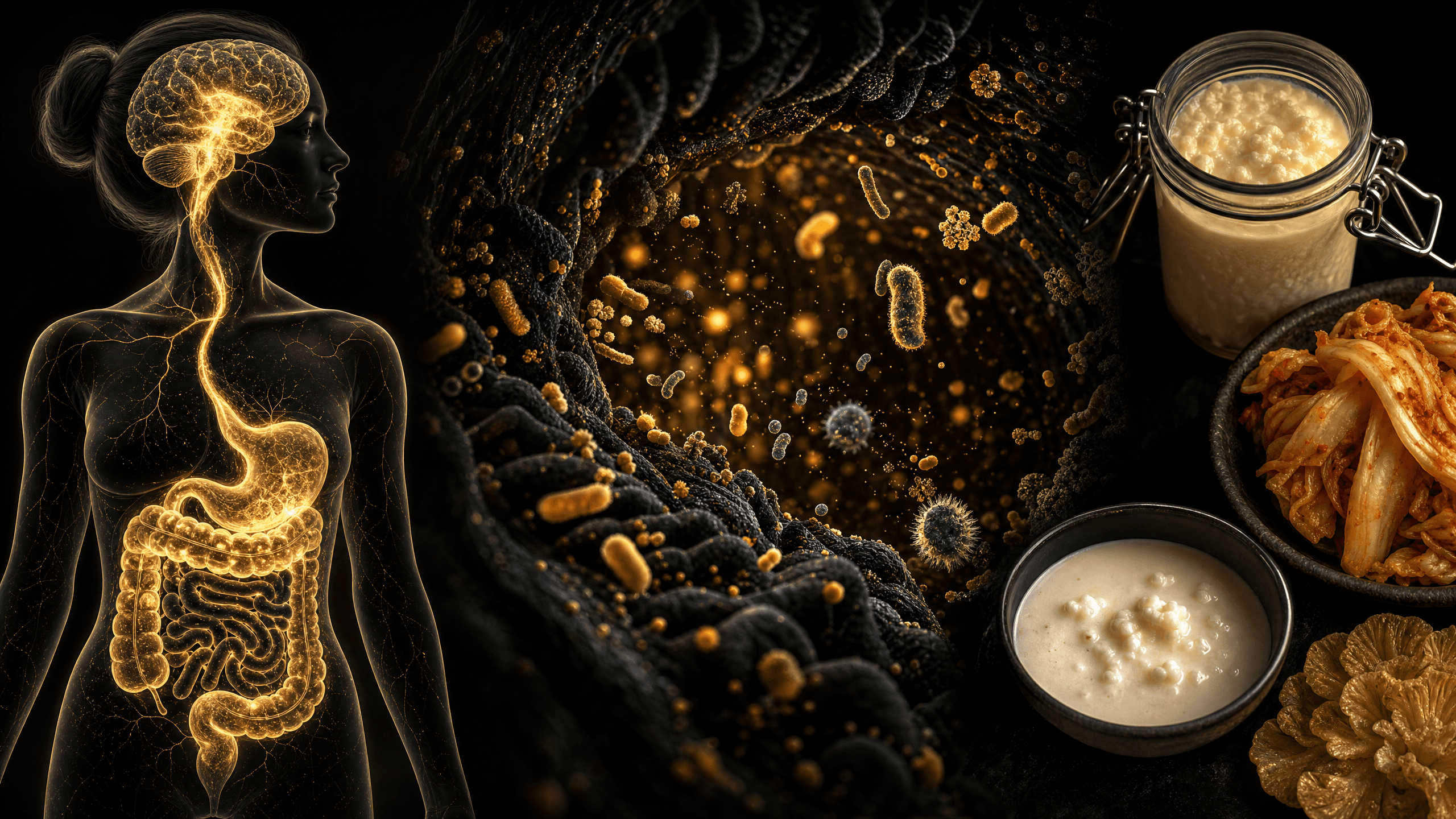
The Ecosystem Within
There are approximately 38 trillion bacteria in the human body. They outnumber your human cells by roughly 1.3 to one. They collectively weigh between one and two kilograms. They encode 100 times more genes than the human genome. And they have co-evolved with Homo sapiens for so long that the boundary between 'them' and 'us' is, at the functional level, essentially meaningless.
The gut microbiome — the community of microorganisms inhabiting your gastrointestinal tract — is not a passive passenger in your biology. It is an active participant in virtually every physiological process: immune regulation, metabolic function, neurotransmitter production, hormonal metabolism, inflammation control, and even gene expression. When this ecosystem is diverse and balanced, it supports health in ways that no supplement or drug can replicate. When it is disrupted — a state called dysbiosis — the consequences extend to every organ system in the body.
Dysbiosis is now recognised as Hallmark #12 of ageing — the most recently added hallmark, reflecting how rapidly this field has developed. It is not merely a cause of digestive symptoms. It is a driver of systemic inflammation, immune dysfunction, metabolic disease, and neurological decline.
Continue this pillar
Build the standards behind Gut Health & Microbiome
Take the next step with SEVYN University courses matched to this pillar, then complete the assessment so your pathway can be prioritised around your data, goals, and current capacity.
Connect digestion, blood sugar, inflammation, and energy regulation.
Place gut health inside the full SEVYN optimisation framework.
Protocols
- ◆30+ different plant species per week (the most evidence-backed microbiome intervention)
- ◆Daily fermented foods: kefir, kimchi, sauerkraut, miso, or kombucha
- ◆Prebiotic fibre: 30–40g daily (inulin, FOS, resistant starch)
- ◆Polyphenol-rich foods: berries, pomegranate, green tea, dark chocolate, olive oil daily
- ◆Eliminate ultra-processed foods (primary driver of dysbiosis)
- ◆Minimise unnecessary antibiotic use
- ◆Comprehensive stool test (Viome, Biomesight, or Genova GI Effects)
- ◆Akkermansia supplementation (Pendulum or Akkermansia Company)
- ◆Spore-based probiotics (Bacillus coagulans, subtilis) for resilience
- ◆L-glutamine 5–10g daily for gut barrier integrity
- ◆Zinc carnosine 75mg for gut lining repair
- ◆Reduce alcohol (directly damages gut barrier and disrupts microbiome)
- ◆Intestinal permeability testing (zonulin, calprotectin, LPS antibodies)
- ◆SIBO (Small Intestinal Bacterial Overgrowth) breath testing if indicated
- ◆Targeted probiotic protocols based on stool test results
- ◆Urolithin A supplementation (Mitopure) for mitophagy induction
- ◆Fecal microbiota transplant (FMT) — emerging frontier therapy
- ◆Quarterly microbiome testing to track optimisation progress
Key Biomarkers
- ●Microbiome diversity score (comprehensive stool test)
- ●Akkermansia muciniphila abundance
- ●Faecalibacterium prausnitzii abundance (anti-inflammatory keystone species)
- ●Butyrate production capacity
- ●Zonulin (gut permeability marker)
- ●Calprotectin (gut inflammation marker)
- ●LPS-IgA/IgM antibodies (immune response to gut bacteria)
- ●hs-CRP (systemic inflammation driven by gut dysbiosis)
Explore the Other Pillars
Begin Your Transformation
Your biology is not your destiny.
Take the SEVYN Biology Baseline assessment and discover exactly where you stand across all seven pillars, with a personalised protocol to begin reversing your biological age.
Start Your Assessment